Mediterranean Mustard Green Wraps with Barley, Tahini and Shredded Rabbit (or Chicken)
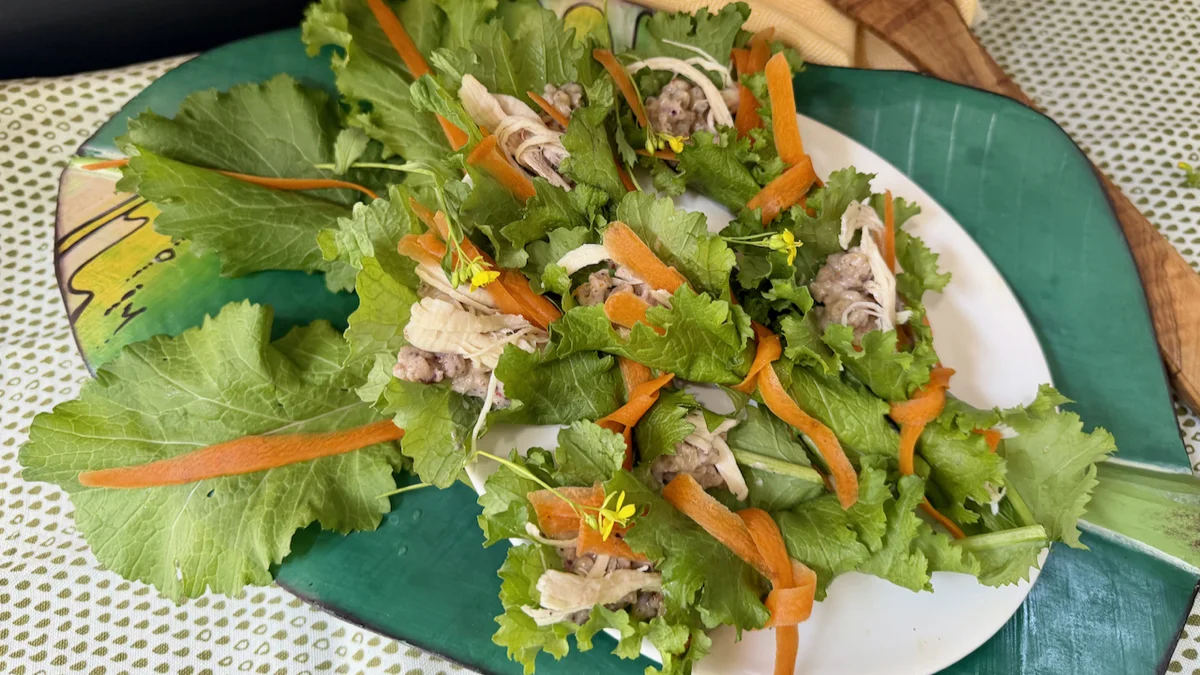
Delicate mustard green leaves packed with spiced barley, shredded rabbit or chicken, and rich tahini dressing, these Mediterranean mustard green wraps are vibrant, gluten-free friendly, and ideal for spring gatherings.
Mustard Green Wraps from My Garden to You
In the garden, there’s a moment, caught between the final chilly mornings of spring and the first confident stretch of summer, when the mustard greens begin to flourish.
They are no longer fragile.
They are robust, ruffled, peppery, stretching forth.
You collect them in handfuls, their aroma sharp and green, realizing they crave something beyond just a simple sauté. They yearn to contain something. To hold flavor.
Thus, instead of bread or tortillas, we allow the garden to take on the wrapping role.
Within each leaf: warm barley stewed with garlic and spices, strands of tender shredded meat, and a subtle richness from tahini. A strip of carrot binds it all together—simple, functional, and a touch of beauty.
These are not wraps in the conventional sense.
They are something more deliberate. Something crafted by hand. Something intended to be shared on a platter, passed around a table, and savored in that fleeting light of early evening.
What Makes These Mustard Green Wraps Distinctive
These mustard green wraps differentiate themselves from typical lettuce wraps by embracing bold flavors, textures, and seasonal ingredients.
Mustard greens introduce a naturally peppery kick that harmonizes with the creamy tahini and savory filling. Unlike lettuce, they maintain their structure, making them perfect for binding and serving.
The barley contributes a nutty, subtly chewy base that absorbs Mediterranean spices like sumac and Aleppo pepper, creating richness without heaviness.
Incorporating shredded rabbit introduces a more refined, earthy taste, while chicken provides an accessible option, allowing this recipe to be flexible for both everyday meals and special occasions.
Components for Mustard Green Wraps and Their Functionality
There’s a subtle intelligence in the ingredients here, each one selected not to clash, but to support something vital.
- Mustard Green Leaves – The mustard greens are the first voice you encounter and arrive early in my spring garden. They enter with clarity, peppery, slightly bitter, undeniably vibrant, reminiscent of watercress or radishes. Unlike softer leaves, they do not vanish when filled. They maintain their shape, their presence, their edge. They remind you that a wrap need not be bland to be good; it can express itself.
- Pre-cooked Shredded Rabbit or Chicken – The shredded meat, whether rabbit or chicken, provides familiarity. Whether freshly cooked and shredded for this dish, or leftover from a prior recipe, it anchors the meal, making it approachable, adding substance. Rabbit offers a gentle, almost earthy sweetness, while chicken leans towards comfort and simplicity. Either way, it serves as a bridge between the intensity of the greens and the tenderness of the grain.
- Pearled Barley – Then there’s the barley, which works at a different pace, more patient. It softens, indeed, but not entirely. It retains a gentle chew, a subtle resistance that grounds each bite. Barley doesn’t rush to impress; it absorbs, it enriches, becoming a modest foundation. In a world of quick grains, it invites you to pause and rewards you for it.
- Garlic – Garlic permeates everything, almost invisibly but always recognized.
It warms the barley from within, imparting that familiar, soothing depth that makes you return for another bite without fully understanding why. - Ground Sumac – The sumac elevates all elements. If the dish has a certain brightness, a gentle spark that catches the edges, this is its source. It does not dominate; it remains. A soft citrus note that feels like light streaming in.
- Aleppo Pepper – Aleppo pepper introduces warmth in a different manner. Not sharp heat, but a warmth that unfolds gradually. It rounds out the dish, providing a sense of wholeness without forcefully asserting itself.
- Tahini Dressing – This Tahini Sauce is my personal innovation, featuring a smooth creamy foundation derived from tahini, enlivened with olive oil, garlic, lemon, and salt. It integrates the barley, enhances the spices, and contributes a richness that feels simultaneously nourishing and soothing.
- Carrots – Next, the carrots. They depict a subtle radiance. Slim, ribboned, and slightly crunchy, they offer contrast in both texture and hue. Within the wrap, they contribute a gentle sweetness. On the outside, they assume a more unexpected role: a binding, a gesture, a finishing touch that elevates the assembly into something nearly ritualistic.
Essential Tools for Preparing These Wraps
- Small Saucepan – Crucial for uniformly cooking barley while enabling it to fully absorb spices, essential for texture and flavor.
- Vegetable Peeler – Produces both delicate carrot ribbons for filling and sturdy strips for securing wraps; this method is visually striking and highly shareable.
- Cutting Board – Offers a stable platform for neatly and efficiently assembling wraps.
- Mixing Spoon – Guarantees even incorporation of tahini sauce into the barley without clumping.
- Small Tea Spoon – Facilitates easy and gentle filling of the leaves with the barley mixture without feeling awkward.
Procedure to Create Mustard Green Wraps (Step-by-Step)
Step 1: Cook the Spiced Barley – In a small saucepan, mix pearled barley, water, garlic, sumac, Aleppo pepper, and salt.
Simmer over low heat until the barley absorbs all moisture and becomes tender (approximately 30-40 minutes). Allow to cool fully.
Step 2: Prepare the Carrot Strips
With a vegetable peeler, shave elongated strips (for wrapping) and shorter strips (for filling).
This offers both structure and texture in the wraps.
Step 3: Combine the Filling
After cooling, mix tahini sauce with the barley until uniformly coated. The blend should be creamy yet not overly wet.
Step 4: Construct the Wraps
Position a long carrot strip horizontally on your workspace. Place a mustard green leaf (underside facing up) above it.
Add:
- 2 teaspoons barley mixture
- A small quantity of shredded rabbit or chicken
- A few short carrot strips
Step 5: Fold and Tie
Gently fold the sides of the mustard green inward, then wrap and secure using the carrot strip.
Fasten firmly, but be cautious not to tear the leaf or pull too hard on the carrot strip.
Step 6: Present
Arrange on a platter or serve individually (2 per portion).
Best enjoyed slightly chilled or at ambient temperature.
https://www.youtube.com/watch?v=9wEqjs7AJy0[/embed>
Additional Garden-Inspired Recipes to Explore
If you’re new to my delightful realm here, know that I draw immense inspiration for crafting new recipes from what sprouts in my gardens. So much so that I recently published a book also inspired by my gardens – Dirt To Dish. Here are just a few recipes I think you’ll adore.
- Smoked Okra and Salmon Salad – Freshly smoked and charred okra paired with smoked salmon over a bed of beet greens and fresh oregano; an easily cultivated garden-to-table recipe.
- Peony Colada Cocktail – This delightful pink peony colada cocktail blends white rum, coconut milk, and homemade peony syrup, garnished with frozen peony petal ice cubes.
- Beetroot Ice Cream – Garden Inspired Beetroot Ice Cream made with naturally sweet and earthy beetroots, cooked and pureed, transformed into a creamy, sweet, rich, and unique Ice Cream.
- Fennel Pollen Ice Cream – A fresh Fennel Pollen Ice Cream Recipe incorporating both fennel flowers and its pollen blended with honey from the bees plus a splash of fennel-flavored liqueur.
- Herb de Provence Spice Blend – This spice blend is incredibly simple to prepare, especially if you cultivate your own or support your local farmers’ markets.
- Homegrown Homemade Fig Jam – Savory or Sweet Fig Jam with chilies, garlic and
bourbon or merely sweet fresh figs; the ideal decadent dressing, sauce or preserve.
FAQ
Can I substitute lettuce for mustard greens?
Certainly, however, mustard greens offer more structure and a zesty flavor that enhances the dish.
How does rabbit taste in wraps?
Rabbit has a mild, slightly sugary flavor, akin to chicken but more tender, making it ideal for infusing Mediterranean spices.
Is it possible to prepare mustard green wraps in advance?
Absolutely. You can assemble them up to 6 hours prior and keep them covered in the fridge.
Is barley free of gluten?
No, you can replace it with quinoa, millet, or rice for a gluten-free option.
What goes well with these wraps?
Accompany them with crostini, hummus with pita flatbread, or a light cucumber salad to create a complete Mediterranean meal.
-
Small saucepan
-
Vegetable peeler
-
small tea spoon
- 12 Mustard Green Leaves large is preferable
- 1 1/2 cup Precooked Shredded Rabbit or chicken
- 1/2 cup Pearled Barley uncooked
- 3 1/2 cups Water
- 2 Garlic cloves crushed
- 1 tsp Ground Sumac
- 1/2 tsp Aleppo Pepper
- 1/2 tsp Salt coarse
- 2 tbsp Tahini Dressing homemade
- 2 Carrots large
-
Cook the Spiced Barley – In a small saucepan, blend pearled barley, water, garlic, sumac, Aleppo pepper, and salt.Simmer on low flame until the barley takes up all liquid and becomes soft (approximately 25-30 minutes). Allow to cool completely.
-
Prepare the Carrot Strips – With a vegetable peeler, create long strips (for tying) and shorter strips (for filling). This adds both structure and texture to the wraps.
-
Combine the Filling – Once cooled, mix the tahini dressing with the barley until uniformly covered. The mixture ought to be creamy yet not soggy.
-
Construct the Wraps – Position a lengthy carrot strip horizontally on your workspace. Set a mustard green leaf (underside facing upward) on top.Incorporate 2 teaspoons of barley mixture, aligning with the spine of the leaf, a small portion of shredded rabbit or chicken, and a few short carrot strips.
-
Fold and Secure – Gently fold the sides of the mustard green inward, then encase and bind using the carrot strip. Fasten firmly, but avoid damaging the leaf or exerting too much pressure on the carrot strip.
-
Present – Display on a platter or serve individually (2-3 per portion). Ideally served slightly chilled or at ambient temperature.
If you’ve recognized how effortlessly mustard greens thrive, and return consistently, or if you’re just yearning for something fresh yet grounding, these mustard green wraps are a subtle invitation to take your time and create something manually.
Preserve this recipe, share it with someone who enjoys seasonal cuisine, and let me know, would you opt for rabbit or chicken?


Post Comment