Overnight Oats – my favorite basic recipe
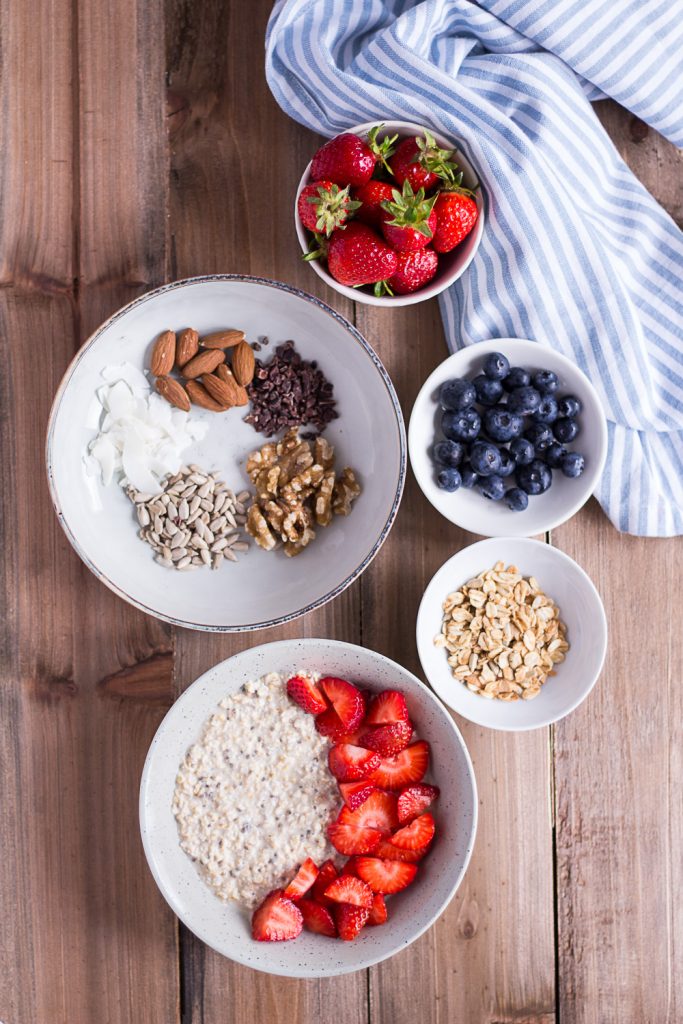
It’s Overnight Oats-time, everyone!
Now, please don’t assume “Boooooring” or “Lynn, we are aware of how to prepare overnight oats.”
Well, I’m certain you do, but I’m on a quest to advocate for nutritious eating and wellness, and I sense that there are still numerous individuals out there who value a straightforward basic overnight oats recipe. For me, crafting the ideal overnight oats is a science, and they can truly be a success or a failure, depending entirely on the accurate proportions of ingredients.
When it comes to overnight oats, folks appear to have many viewpoints. “They are excessively dry. They are overly soggy. They taste odd.” – are all expressions I’ve encountered regarding my favorite breakfast. However, overnight oats are nothing more than soaked grains. In fact, my boyfriend’s father would soak his muesli in milk before serving it to him. So technically, my boyfriend consumed overnight oats throughout his youth, while I had not even learned about them six years ago.
Why are Overnight Oats beneficial?
Oats provide a multitude of essential nutrients such as biotin, magnesium, iron, silicon, and even B-Vitamins. Biotin is crucial for healthy skin and hair, Vitamin B1 supports a healthy nervous system, and Vitamin B6 is necessary for proper blood function. It is also required during serotonin production, a happiness hormone, so oats can indeed brighten your mood.
By soaking oats overnight, they become significantly more digestible. The reasoning behind soaking them for a few hours before consumption lies in the presence of phytic acid. This acid is found in the outer layers of grains, legumes, nuts, and beans, and serves to protect the food from sprouting while stored. Once the sprouts are in suitable conditions, phytic acid aids them in sprouting as it provides energy. However, for humans, phytic acid hampers the optimal absorption of several nutrients like zinc, magnesium, iron, and calcium. Soaking grains such as oats helps break down the phytic acid. Incorporating a small quantity of acidic liquid, like vinegar or lemon juice, is said to activate phytase, an enzyme that degrades phytic acid.
It’s all about the ideal ratio
I combine my overnight oats at a ratio of 1:1.5. For every cup of oats, I utilize 1.5 cups of oat milk for soaking. In grams and milliliters, that translates to 100 grams of oats and 375ml of oat milk. Occasionally, I may add a tad more milk until the oats are fully submerged, but there’s a fine line between just right and too soggy, so ensure you don’t overdo the milk. Then I incorporate two tablespoons of chia or freshly ground flax seeds.
If you have a gluten sensitivity, make certain to use certified gluten-free oats and also certified gluten-free oat milk. Unfortunately, that can be challenging to locate, so almond milk would suffice, or you could whip up your own gluten-free oat milk with this recipe.
Toppings Fiesta:
The following morning, you’ll find a delightful pot of overnight oats waiting for you, and this is where the excitement begins. Now you can add all the toppings you adore that will nourish your body. Since breakfast is, for many, the healthiest meal of the day, it’s incredibly vital that we treat ourselves to extra nutrition in the morning. Here’s a list of my preferred toppings, but feel free to select your favorites.
- fresh berries
- banana
- nuts & seeds
- hemp seeds
- bee pollen
- homemade granola
- almond butter
- peanut butter
- cashew butter
- cacao nibs
- mulberries & goji berries
I hope this brief guide proves useful, and you’ll find yourself enjoying your overnight oats much more than before. Share your favorite nutritious breakfast options in the comments below.
Overnight Oats – my favorite basic recipe
5 Stars 4 Stars 3 Stars 2 Stars 1 Star
No reviews
Author: Lynn Hoefer
Total Time: 5 minutes
Yield: 2 1x
- 1 cup (100g) of rolled oats, use certified gluten-free if needed
- 1.5 cups (375ml) of oat milk, use certified gluten-free or almond milk if needed
- a squeeze of lemon juice
- 2 tablespoons of chia seeds or freshly ground flax seeds
- 1/2 teaspoon of cinnamon
- a pinch of vanilla powder
Instructions
- Simply combine all the ingredients in a bowl or glass container and allow to soak overnight in the refrigerator or at least for 30 minutes.
- Savor in the morning with your favorite toppings.
Enjoy!
DID YOU MAKE THIS RECIPE OR HAVE ANY SUGGESTIONS, QUESTIONS OR COMMENTS?
Feel free to leave a comment below, and don’t forget to tag your creations on social media using #heavenlynnhealthy.
I’d love for this blog to facilitate a dialogue.




Post Comment