Purple Sweet Potato Bread Crostini with Pea Pesto
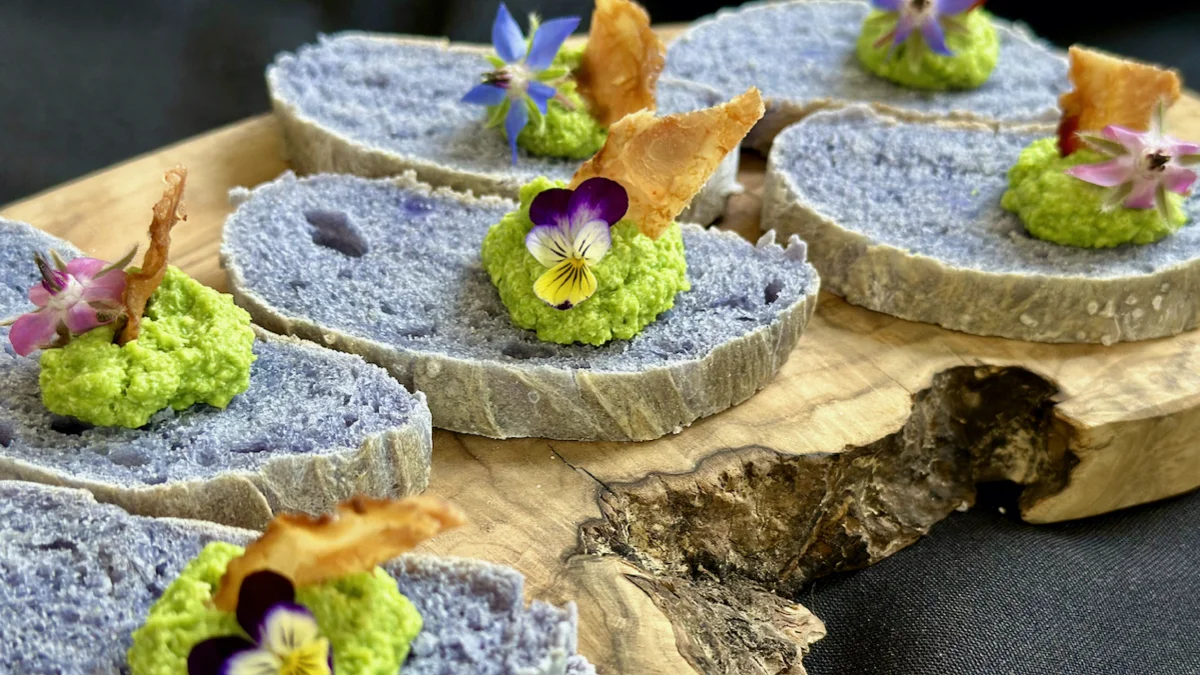
A delightful purple sweet potato loaf transformed into chic crostini topped with vibrant pea pesto, crispy bacon or parmesan, and edible blossoms. A lively, garden-inspired starter ideal for spring gatherings.
Garden Inspired Purple Sweet Potato Bread Crosini
There exists a unique form of beauty that doesn’t demand the spotlight; it simply thrives, quietly glowing.
Upon slicing a purple sweet potato, a hue so surprising emerges, it almost seems like a fantasy. It’s not garish, nor synthetic, but profound and earthy, akin to dusk settling over the garden. This is an ingredient that beckons you to pause, to craft something that resembles more of a creation than mere cooking.
This loaf originated there, rooted in color.
Cooked into a tender loaf, sliced into delicate rounds, and repurposed into crostini, it becomes a blank slate. A vivid green swipe of pea pesto, a crispy fragment of bacon, a petite edible bloom resting lightly on top; it is straightforward yet feels like something greater.
Not everything requires haste or utility. Some recipes exist solely due to their beauty.
And this stands among them.
Purple Potatoes and Green Peas Inspire A Whimsical Moment
What would be the result if you merged Gourmet Magazine with a dash of Disney? I couldn’t resist illustrating these flavorful garden-inspired elements in a playful animation. I hope it brings a smile to your face!
What Makes Purple Sweet Potato Bread So Unique
Purple sweet potato homemade bread is inherently vivid, packed with nutrients, and deeply flavorful. Unlike artificially tinted breads, the color arises completely from the potato itself, infusing subtle sweetness and moisture into the dough.
When baked, it produces:
- A soft, delicate crumb ideal for slicing
- A gentle, subtly sweet taste that complements savory toppings
- A stunning visual contrast, particularly when converted into crostini
This makes it perfect for starters, entertaining platters, or gatherings inspired by the garden.
Ingredients and Their Significance
Purple Sweet Potato (medium, purple flesh) – This is the starting point. Purple sweet potatoes introduce a naturally rich, nearly luxurious color that feels both grounded and surprising. Beyond aesthetics, they contribute moisture and a slight sweetness that softens the bread’s crumb. The starches found in the potato facilitate a rapid rise and help create a tender interior, making each slice perfect for crostini, firm enough to support toppings yet soft enough for easy biting. When selecting one, aim for deep purple flesh to achieve the most vibrant outcome.
Yeast – Yeast breathes life into the dough. Activated in the warm potato liquid, it commences fermentation, forming air pockets that impart a light, airy texture to the bread. This is particularly crucial for a dough enriched with potato, which can otherwise turn dense if not properly risen.
Sugar – Just a minor amount, yet it holds a vital role. Sugar nourishes the yeast during the initial phases, assisting in quicker and more reliable activation. It also accentuates the natural mild sweetness of the potato without imparting any overt sweetness to the bread.
Salt – Salt enhances everything. It balances the potato’s sweetness, fortifies the dough structure, and ensures the bread retains its flavor depth. Without it, even the most exquisite loaf would taste lacking.
Flour (as required) – Flour is the backbone of structure, yet here it’s intentionally adaptable. As sweet potatoes differ in moisture content, the specific quantity of flour will vary slightly each time. Gradually incorporating it enables you to achieve a dough that is soft, smooth, and sufficiently solid to maintain its shape—never dry, never overly sticky.
Water (for cooking the potato) – This isn’t merely cooking liquid; it integrates into the flavor profile. Utilizing the potato water in your dough carries subtle starches and nutrients into the bread, enhancing both texture and taste.
Olive Oil – A modest yet significant enhancement. Olive oil assists in maintaining the dough’s flexibility during rising and hinders adhesion. It also adds a subtle richness that harmonizes with both the sweet potato and the savory toppings.
Egg and Water (Egg Wash) – Applied to the loaf prior to baking, this results in a tender golden crust with a delicate gloss. This uncomplicated step provides the bread with a polished, bakery-like finish, which is particularly vital when presentation counts.
For the Crostini Topping
Pea Pesto – Lively, verdant, and teeming with vibrancy, Pea Pesto adds brightness to each mouthful. The inherent sweetness of peas reflects the sweet potato while providing a fresh, herbal lift. Its velvety consistency spreads seamlessly across each slice, serving as both flavor and base for the toppings.
Bacon or Parmesan (cooked until crispy) – Here’s where the contrast comes into play. The crunchy, salty bite of bacon or parmesan chips balances the softness of the bread and the sweetness of both the potato and peas. It contributes structure, texture, and complexity, transforming something delicate into a well-rounded and complete offering. Ensure it’s fully crisp to maintain its shape when placed on top.
Edible Flowers (violets, borage, or similar) – Not essential, yet subtly transformative. Edible flowers infuse a softness that no other element can replicate. Their hues reflect the shades of the bread and pesto, establishing a sense of harmony that feels almost artistic. Even a single small bloom on each crostini elevates the dish into something unforgettable, something that feels intentional.
Necessary Tools
Utilizing the appropriate tools guarantees even texture, suitable rise, and a polished presentation.
- Saucepan – for cooking and evenly softening the sweet potato
- Blender or Food Processor – ensures a smooth puree, which is crucial for uniform dough texture
- Mixing Bowls – one for activating yeast, and another for rising dough
- Baking Sheet – shapes a rustic loaf ideal for slicing into crostini
- Pastry Brush – for uniform egg wash application
- Serrated Bread Knife – necessary for clean crostini cuts without tearing
How to Prepare Purple Sweet Potato Bread Crostini
Step 1: Cook and Puree the Sweet Potato – Peel and chop the purple sweet potato into small pieces. Place in a saucepan filled with water, bring to a boil, then lower heat and simmer until tender. Cool and puree until velvety.
Step 2: Activate the Yeast – Measure 1 1/2 cups of the potato liquid/puree mixture. Sprinkle yeast and sugar on top and let rest for 5 minutes until foamy.
Step 3: Create the Dough – Incorporate salt and a small quantity of flour. Stir, then incrementally add more flour until a soft dough emerges. Knead by hand until the dough turns smooth and no longer sticky.
Step 4: First Rise – Transfer dough to an oiled bowl, cover, and let rise in a warm environment for approximately 1 hour, or until it has doubled in volume.
Step 5: Shape the Loaf – Deflate the dough, then mold it into a loaf. Place on a baking sheet.
Step 6: Second Rise and Egg Wash – Brush with egg wash and allow to rise again for 30 minutes as the oven preheats to 400°F.
Step 7: Bake – Bake for 18-20 minutes until the top is golden and the loaf sounds hollow when tapped.
Step 8: Assemble the Crostini – Cut the bread into ½-inch slices. Top each slice with:
- 1 tablespoon pea pesto
- A piece of crispy bacon or parmesan
- An edible flower
Arrange on a serving platter and serve promptly.
Additional Sweet Potato Recipes to Explore
In this dish, purple sweet potatoes are utilized to craft a delightful crostini that acts as a base for a vibrant pea pesto; however, various sweet potato recipes exist that are designed to be sugary.
- Classic Cookie Crust Sweet Potato Pie – Infused with bourbon, this pie features a buttery, rich pecan cookie-like crust enveloping a decadent sweet potato custard filling, making it accessible for beginner bakers!
- Sweet Potato Crepe Dessert – Delicate sweet potato crepes layered with a luscious passion fruit filling, resulting in a distinctive cake recipe that can be prepared in half the time compared to traditional cake.
More Crostini Recipes to Consider
- Fresh Fig and Pecan Crostini – Pecan yeast bread crostini topped with fig and honey, this features a multi-grain and pecan flour loaf adorned with yogurt, fresh figs, and a drizzle of honey.
- Grilled Peach Pecan Crostini with Honey, offers a homemade pecan crostini bread as the base for grilled peaches drizzled with a balsamic honey sauce.
- Mediterranean Ratatouille Crostini – A bruschetta composed of fresh tomatoes, eggplant, peppers, and other summer produce, served atop slices of rustic bread.
FAQs
Can I substitute regular sweet potatoes for purple ones?
Indeed, but the color will be orange rather than dark purple. The flavor will remain comparable.
Why is my bread heavy instead of light?
This typically occurs if excessive flour is added or if the dough has not risen sufficiently.
Can I prepare purple sweet potato bread in advance?
Yes. Bake the bread 1-2 days beforehand and keep it wrapped. Slice and assemble crostini just prior to serving.
What can I use as a bacon alternative?
Parmesan crisps or plant-based substitutes work excellently for a vegetarian version.
Is this recipe suitable for hosting?
Absolutely. These crostini are visually appealing and perfect for spring gatherings, brunches, or garden events.
- Sweet Potato Bread
- 2 tsp Yeast
- 2 tsp Sugar
- 1 Purple Sweet Potato medium
- 1 1/2 cups Water
- 4 cups AP Flour or as required
- 1 tbsp Salt
- 1 tsp Olive oil
- Egg Wash
- 1 Egg
- 1 tsp Water
- Crostini Topping
- 3/4 cup Pea Pesto
homemade
- 5 Cooked bacon strips or crispy parmesan
- Edible flowers (optional) as desired
-
Sweet Potato Bread
-
Peel and dice the purple sweet potato into small pieces. Place them in a pot with water, bring to a rolling boil, then lower the heat and let simmer until tender. Allow to cool and blend until smooth.
-
Take 1 1/2 cups of the potato liquid/puree combination. Sprinkle yeast and sugar across the surface and let rest for 5 minutes until bubbly.
-
Incorporate salt and a small quantity of flour. Mix, then slowly add additional flour until a pliable dough is formed. Knead it manually until it feels smooth and ceases to be sticky.
-
Transfer the dough into a greased bowl, cover, and let it rise in a warm area for approximately 1 hour or until it has doubled in volume.
-
Deflate the dough, then mold it into a loaf shape. Position it on a baking tray.Brush with an egg wash and allow it to rise again for 20 minutes while preheating the oven to 400°F.Bake for 18-20 minutes until the top turns golden and the loaf emits a hollow sound when tapped.
-
Assemble the Crostini
-
Cut the bread into ½-inch slices.Top each slice with: 1 tablespoon pea pesto, a piece of crispy bacon or parmesan, and an edible flower.Arrange on a serving plate and serve right away.
If you create this purple sweet potato bread crostini, I would love to see how you bring it to life. Tag your interpretation, share your feast, or simply let me know how it felt to create something so vibrant, something a bit outside the ordinary.



Post Comment