Mediterranean Tagine Lamb Stew With Exotic Spices And Apricots
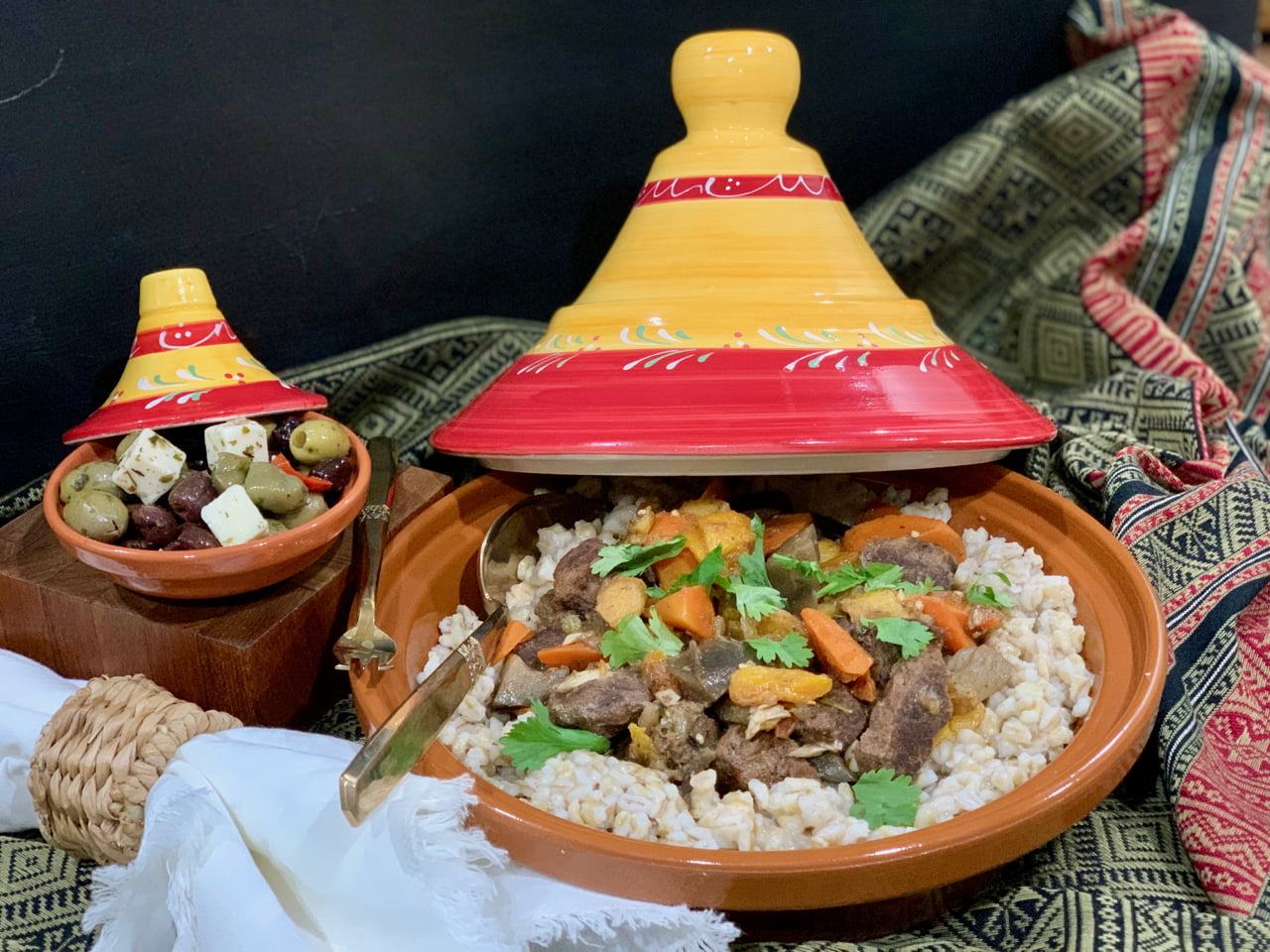
Tagine Mediterranean Stew is prepared slowly in an ancient Tagine clay container featuring lamb, vegetables, unique spices, and apricots.
Customarily simmered gently in the Tagine clay vessel to enhance its fragrant flavors; an ancient method not easily replicated in contemporary cooking.
What Is A Tagine?
A Mediterranean lamb tagine transcends being just a dish; it represents a cooking approach that values patience, hospitality, and the magic of time. It hails from North Africa and traverses the Mediterranean through trading, migration, and communal dining, with the tajine encapsulating a landscape influenced by spice routes, olive orchards, and sun-dried fruits.
Traditionally prepared in a clay container of the same title, the tagine is engineered for slow, delicate heat, ideal for converting tougher lamb cuts into exquisitely tender morsels. As the concoction simmers, steam ascends and returns to the pot, imbibing layers of spice, sweetness, and savory complexity. There is no haste; everything is permitted to become its true self.
Mediterranean Lamb Stew
What renders a lamb tagine so appealing is its harmony. Warm spices intertwine with fruit and honey, tanginess balances richness, and a hint of heat remains on the palate. Lamb, perfectly matched to these tastes, soaks up the spice-infused sauce while contributing its own richness in return. Vegetables soften, dried apricots swell, and the sauce becomes something you’ll yearn to savor with bread long after the last piece of meat has vanished.
Throughout the Mediterranean, adaptations of tagine exhibit local ingredients and personal preferences, sometimes aromatic with herbs, occasionally bright with citrus, or deeply sweet and spiced. Yet at its core, every tagine invites you to decelerate, gather close, and allow the food to express itself.
Tagine – The Ancient One Pot Cooking
Let’s first elucidate the Tagine pot (also spelled tajine); envision a timeworn slow cooker. The ancient, handcrafted clay, earthen, or ceramic baking vessels, featuring a cone-shaped lid known as a conical lid, which captures steam during cooking, retaining the liquid inside the clay pot.
This style of ancient cuisine was crafted to retain moisture in less desirable cuts of meat (think, goat or mutton), while forming a concentrated flavor profile from the additional ingredients.
Historically, this was primarily done over hot coals or open flames. No, we are not planning to make this remarkable dish over an open fire, although we could.
Slow cooking on the burner is the method utilized for this lamb Tagine stew, following a similar contemporary concept as a crockpot.
How To Use A Tagine Pot To Cook Stew
The first essential step in cooking with the Tagine pot, which you have already seasoned (similar to how a cast iron pot is seasoned), is to marinate the meat being utilized.
The marinade commonly employed, which I observed frequently during my time in Brazil; Salt. Simply coarse salt.
Salt is rubbed into the meat and allowed to rest for several hours. This is the optimal method to tenderize meat.
When prepared to cook, layering the Tagine pot in a specific sequence is the next crucial factor in using a Tagine pot.
Step By Step Preparation Of The Tagine
- Begin by layering the bottom of the clay dish with moist vegetables, such as onion, celery, carrots, fennel, or other moisture-rich ingredients.
- Generously drizzle olive oil over the base of the vegetables.
- Add the meat, fish or
- Place the alternate protein, ensuring space around the perimeter for additional vegetables, like potatoes, eggplant, or other slower-cooking options.
- Position the larger vegetables around the periphery of the protein.
- Dried fruits are added afterward and are commonly seen in Middle Eastern stews such as this, as they not only enhance flavor and create contrast with the spices via a touch of sweetness, but the concentrated sugar content in dried fruits also aids in further tenderizing the meat during cooking.
- Seasonings are layered atop the ingredients so that when steam forms inside the pot, the spices disperse throughout the layers, enhancing the flavor concentration.
- Water, broth, or a splash of wine is poured over, just to the level of the meat.
- Cook on low heat for 1 to 1.5 hours, checking the liquid level to ensure it remains sufficient.
Mediterranean Spices
Numerous stories have been recounted about the alluring, sometimes war-driven longing for the spices from the Middle East and Asia. What’s the reason?
The ancient spices from this region are the cornerstone that shaped, impacted, and refined our contemporary culinary landscape.
While every woman from the Middle East carries her unique legacy of spices inherited from her grandmother, I too have mine, as it is, indeed, my lineage as well.
My Spice Profile
Before browning the lamb for the stew or plumping the apricots in their syrupy sauce, this tagine starts with spices, measured not only with a spoon but through intuition. I blend these warm, aromatic notes myself, a small ritual that sets the mood for the dish and fills the kitchen with anticipation.
In this specific Tagine recipe, I opted for lamb, so I selected a flavor profile that I know best enhances the lamb; however, other proteins like goat, venison, or a hearty fish like salmon can also be utilized.
Prepare this spice profile and store it for other dishes:
- Sumac introduces the first zest: a mild, citrusy tang that elevates the richness of lamb and balances the sweetness. It’s vibrant without being harsh, reminiscent of a squeeze of lemon softened by sunshine and time.
- Ginger powder provides a gentle warmth, mild rather than fiery, awakening the taste buds and integrating seamlessly into the syrupy sauce as it simmers.
- Paprika (whether home-smoked or store-bought) contributes a subtle smokiness, conjuring images of open flames and clay pots, adding hue and a savory backbone that harmonizes with the fruit and spices.
- Ground coriander enriches the blend with its citrus-floral undertones, linking brightness and warmth, while cardamom concludes the narrative, aromatic, slightly sweet, and undeniably luxurious, lingering long after the final bite.
When preparing Tagine with poultry, fish, goat, pork, or a vegetarian variation using the hearty Fava Bean, I specifically adjust the spice profile to complement the protein.
Homemade Mediterranean Chermoula
In my refrigerator, you are likely to discover a jar of Homemade Chermoula, which presents a lovely and refreshing flavor profile I maintain for a quick meal or a slow-cooked stew.
It pairs exquisitely with fish, poultry, and vegetarian dishes.
Lamb and Apricot
Whether it’s lamb and apricot, pork and prunes, squab and dates, or fish and figs, Mediterranean cuisine is well-known for utilizing the concentrated sugars in dried fruits to balance the complex layers of spices.
Given that sugar molecules are significantly larger than salt ions, they act as a natural tenderizer in less expensive cuts of meat.
Culinary traditions from ancient times instinctively recognized how dried fruits, often dates, raisins, or figs, would soften an old and tough piece of meat.
What Grains to Accompany Tagine
As I seldom add potatoes in my Tagine (a more European take on stew preparation), I prioritize cooking barley or my favorite Moroccan Rice Recipe With Dried Fruit, a dish you could almost enjoy on its own!
Required Ingredients
This lamb tagine is constructed layer upon layer, with each ingredient selected for how it enriches the pot and transforms into something splendid over time.
- Lamb serves as the essence of the dish, flavorful, resilient, and ideally suited for slow cooking. As it simmers, it absorbs the warmth of the spices and the sweetness of the sauce, becoming tender enough to yield at the mere touch of a spoon.
- Eggplant melds seamlessly into the tagine, soaking up olive oil and spices while contributing a silky texture to the sauce. Carrots provide an earthy sweetness that intensifies with cooking, resonating with the fruitiness of the dried apricots.
- A generous sprinkle of coarse Salt early in the process draws out moisture and flavor, prepping the vegetables and lamb for what’s ahead. Onion and Garlic establish the aromatic foundation, gently softened in Olive Oil until sweet and fragrant, while Chili Peppers introduce a mild spiciness that lingers without overpowering.
- Dried Apricots are the point where the magic happens; plump and gem-like, they unleash their honeyed sweetness into the sauce, achieving that distinctive harmony of savory and sweet. A drizzle of Honey enhances this note, rounding the flavors and binding together the fruit and spice.
- A splash of Red Wine imparts depth and acidity, deglazing the pot and enriching the sauce, while water gradually amalgamates everything into a cohesive, aromatic braise.
- The homemade Spice Profile, containing sumac, cinnamon, ginger powder, smoked paprika, ground coriander, and cardamom, blooms in the warm oil, enveloping every ingredient in aroma and hue before the liquids are added.
- Topped with a sprinkle of Cilantro or Rosemary, the tagine emerges intensely aromatic, well-balanced, and comforting, sweet, spiced, and gently warmed, intended to be enjoyed slowly, spoon by spoon.
Tools Required
- Large Clay Tagine Pot – is at the core of this dish. A distinctive cooking vessel that is truly worth possessing. Its conical lid delicately circulates steam back into the dish, fostering a moist, slow-cooked environment that transforms humble ingredients into something intensely aromatic and tender. Cooking in clay is not just practical; it’s sensory, ritualistic, and grounding, encouraging you to slow down and let the pot perform its magic.
- A large mixing bowl is imperative for seasoning the lamb and vegetables, allowing the spices and olive oil to evenly coat everything. Two small mixing bowls keep spices, dried fruit, or liquids measured and ready, creating a calm and intentional cooking process.
- A sturdy Cutting Board and a sharp Chopping Knife are your supportive allies here, guiding you through onions, eggplant, carrots, and herbs effortlessly. A Slotted Spoon assists in lifting and layering ingredients without disturbing the sauce as it develops.
- The Garlic Press transforms garlic into a soft, aromatic paste that integrates seamlessly into the base of the tagine, ensuring no harsh notes, only warmth.
- 2 lb Lamb cubed
- 1 Eggplant cubed
- 1 tbsp Coarse salt
- 1/2
cup Apricots diced
- 4 Carrots, large
- Fresh Cilantro and Rosemary finely diced
- 2 tbsp Olive oil
- 1 Onion, large diced
- 4 Garlic cloves minced
- 3 Chili peppers finely diced
- 1 tbsp Sumac
- 1 tbsp Ginger powder
- 1 tsp Paprika house-made
- 1 tsp Cinnamon
- 1 tsp Ground Coriander
- 1 tsp Cardamom
- 1 tsp Salt
- 2 tbsp Honey
- 1/2 cup Red wine
- 1 cup Water add more if necessary
-
Combine the cubed lamb pieces and cubed eggplant in a bowl, rubbing the coarse salt into the meat and eggplant, then let it sit at room temperature for an hour.
-
Peel and slice the carrots into pieces akin to the size of the meat and eggplant chunks. Set aside.
-
In a small bowl, combine the spices: sumac, ginger, paprika, cinnamon, coriander, cardamom, and salt, mix them together and set aside.
-
In another small bowl, mix the honey, wine, minced garlic, and diced chili peppers, then set aside.
-
Arranging Tagine For Cooking
-
Position the large Tagine pot on the stove and set the heat to low or medium low.
-
Begin layering the components, placing the onions at the bottom, drizzling the olive oil, adding the meat and eggplant on top of the oiled onions, followed by the apricots and finally sprinkling the spice mixture over everything, arranging the carrots around the periphery.
-
You should start to hear the onions sizzle slightly by now. Pour the wine mixture over everything, then add the water. Cover, reduce the heat, and allow the mixture to simmer for about an hour, undisturbed.
-
Remove the cover and add the chopped cilantro and rosemary, gently stir, and serve over cooked barley or rice with a side of olives and cheese.
A cast iron Dutch oven can be used in place of the clay tagine pot if necessary.

Post Comment