Botanical Flatbread Crackers (Carta di Musica with Edible Flowers and Herbs)
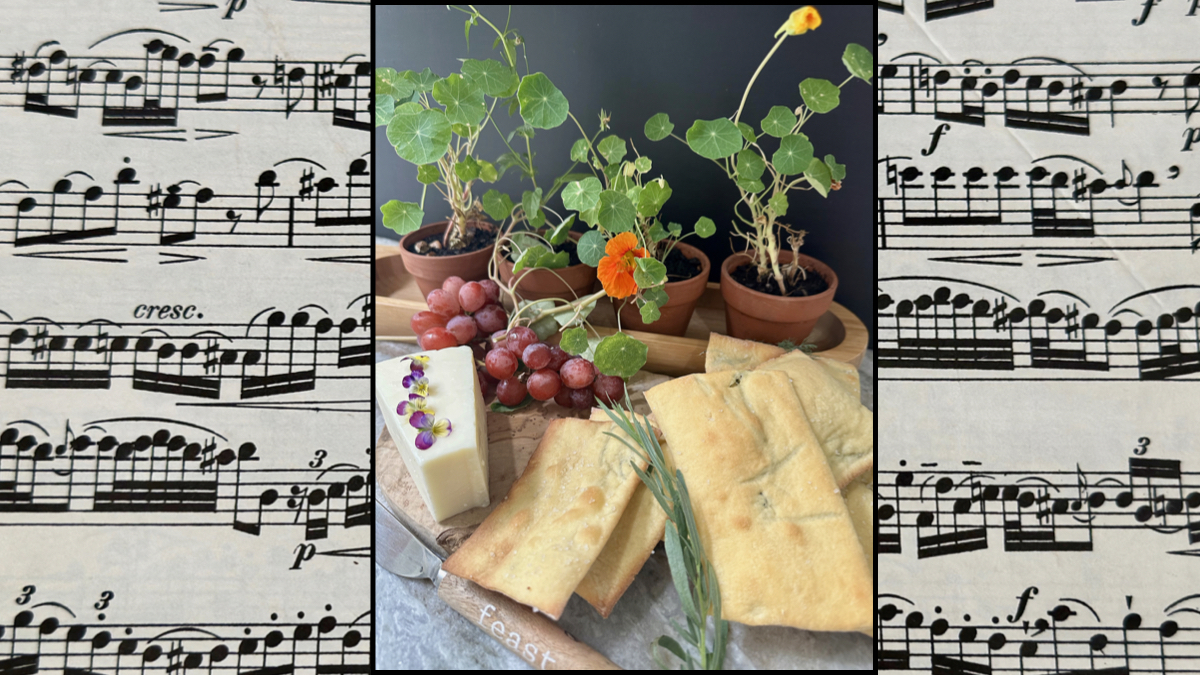
Crispy herbal flatbread crackers inspired by classic carta di musica, crafted with edible blossoms and fresh herbs compressed into tender, golden layers. An exquisite, artisan starter.
Botanical Crackers with Herbs and Blossoms
Certain recipes exist solely to provide sustenance, while others resemble quiet artworks.
These herbal flatbread crackers, drawing inspiration from the ancient Italian carta di musica, beautifully bridge both realms. Known for its whisper-thin crunch and long-lasting qualities, this rustic flatbread transforms into something entirely unique when adorned with edible blooms and fresh herbs.
As the dough passes through the pasta roller, tiny pansies, delicate rose petals, and aromatic herbs are embedded between its layers, preserved like tiny botanical mementos. Once baked, they come out golden and crisp, each piece uniquely designed, almost too lovely to consume. Almost.
What Is Carta Di Musica?
Carta di musica, or “sheet music bread,” is a classic Sardinian flatbread recognized for its ultra-slim, crisp consistency. Traditionally made for lengthy travels, it can remain fresh for weeks without spoiling.
In this adaptation, we utilize the method but slightly soften the tradition, incorporating yeast for a more delicate texture and employing a pasta roller to achieve a consistent, refined thinness.
The outcome is something that lies between a cracker and a flatbread:
- crisp, but not fragile
- rustic, yet refined
- simple, yet visually striking
A Contemporary Spin On The Timeless Carta Di Musica Bread-Crackers
The first time I crafted carta di musica bread-crackers, I simply employed a cherished yeast bread recipe of mine, kneaded it a bit more with my dough mixer, and rolled it through my pasta machine.
With lengthy strips of dough rolled out on my floured workspace, I arranged fresh edible flowers atop the dough, added some herbs from my garden, and rolled it through the pasta machine once more.
This is a recipe anyone can effortlessly execute with a few modern kitchen gadgets available.
Why Botanical Crackers Are So Unique
These crackers are not merely a vessel for cheese or spreads; they enhance the presentation, resembling fabric or an illustrated scroll, resulting in the perfect artistic hors d’oeuvre crispy crackers.
Embedding herbs and edible flowers into the dough produces:
- natural hues and designs
- subtle herbal fragrance
- a centerpiece that sparks conversation
Each batch is entirely distinctive, making them perfect to use in place of:
I now refer to my – carta di musica – as a ‘bread-cracker’ because it is a bread dough recipe transformed into a robust cracker that lasts longer than most homemade cracker recipes.
Carta di Musica Ingredients (with purpose)
- Yeast brings life to the dough. Despite these crackers being rolled paper-thin, a slight rise develops flavor and structure, preventing the cracker from being flat or fragile. It adds that subtle, bread-like depth that makes Carta di Musica taste rich rather than dry.
- Sugar, just a hint of sugar is utilized to activate the yeast and assist in its process. It’s not there to sweeten the cracker, rather to promote gentle fermentation and contribute a mild warmth that balances the salt and herbs.
- Sea salt, both fine and coarse – fine sea salt seasons the dough from within, enhancing
- every ingredient without dominating it. Coarse sea salt is scattered on top, contributing texture, a subtle crunch, and fleeting bursts of salinity that render each mouthful intriguing and irresistible.
- Extra virgin olive oil imparts richness and a distinct Mediterranean essence. It tenderizes the dough, facilitates a crisp yet tender snap, and imbues the crackers with fruity, peppery hints that remain on the palate, demonstrating that uncomplicated ingredients can still exude elegance.
- Water unites all components and enables the flour to form just enough gluten for robustness and flexibility. It’s the unassuming ingredient that converts dry elements into a malleable dough, permitting it to be rolled extraordinarily thin without tearing.
- All-purpose flour establishes the framework. It’s resilient enough to maintain its shape, yet light enough to bake into a airy, crackling sheet. This equilibrium is what imparts Carta di Musica its characteristic “paper-thin” quality.
- Fresh herbs and edible flowers: tarragon, parsley, thyme, rosemary, pansies, rose petals, nasturtium flowers or leaves. Impressed into the dough, they scent the oven as they bake and bestow a rustic charm, each cracker serving as a miniature, edible canvas of flavor.
Essential Tools
- Pasta machine is the key to achieving that signature paper-thin quality. It enables the dough to be rolled uniformly and effortlessly, generating long, delicate sheets that bake into crisp, crackling perfection. This device transforms basic dough into something nearly enchanting.
- Mixer with a dough hook, or this task can be done manually in a large mixing bowl. The mixer does the initial work of combining the dough, kneading it just enough to build structure without excessive handling. Utilizing a dough hook creates a seamless, pliable dough that’s easy to rest, roll, and stretch thin without damage.
- Rolling pin, even with a pasta machine, a rolling pin holds significant importance. It assists in flattening the dough into manageable pieces prior to passing it through the rollers and allows for gentle modifications when shaping or finalizing by hand. It serves as a reminder that tactile involvement endures.
- Basting brush is applied to lightly coat the dough with olive oil, enhancing flavor and enabling the surface to bake into a golden, crisp texture. It’s a minor step, but one that has a substantial impact on both texture and flavor.
- Knife – A sharp knife or pastry cutter grants the ability to cut the dough smoothly into rough shapes or tidy rectangles. Precision isn’t necessary here; part of Carta di Musica’s allure is its charming, handmade appearance.
- Oven – The oven completes the metamorphosis. A hot bake dries the dough rather than softening it, converting thin sheets into crisp, musical crackers that break cleanly when snapped. It’s where patience and simplicity ultimately evolve into texture and flavor.
Instructions for Creating Botanical Flatbread Crackers
Step 1: Proof the Sponge – Combine yeast, sugar, and lukewarm water. Allow to sit momentarily until dissolved and slightly frothy.
Step 2: Prepare the Dough – Gradually incorporate salt, olive oil, and flour, mixing until a soft dough forms.
Step 3: Knead & Shape – Continue adding flour until the dough achieves a smooth and elastic character, forming a soft ball.
Step 4: First Rising – Transfer to an oiled bowl, cover it, and let it rise until it doubles in size, around 1 hour.
Step 5: Rest & Preheat – Deflate the dough, let it rest for 5 minutes, and preheat the oven to 350°F.
Step 6: Roll & Thin – Roll the dough to approximately ¼ inch thick, then begin passing it through the pasta roller, decreasing thickness gradually.
Step 7: Incorporate Botanicals – Place herbs and flowers atop the dough, fold it over, and run it through the roller one final time to embed them.
Step 8: Cut & Finalize – Cut into preferred shapes, lightly brush with olive oil, and sprinkle with coarse salt.
Step 9: Bake – Bake for approximately 10 minutes, keeping a close eye to prevent over-browning.
Step 10: Allow to Cool
<span id="ezoic-pub-ad-placeholder-712" data-method="ai-placeholders" class="ezoic-autoinsert-ad"/><span data-ez-ph-id="712"/>
<h2 class="wp-block-heading">Commonly Asked Questions</h2>
<p class="wp-block-paragraph"><strong>Are all blooms safe for consumption?</strong> No, solely utilize edible, food-safe blooms that are free from pesticides.</p><!– Ezoic – wp_incontent_10 – incontent_10 –><span id="ezoic-pub-ad-placeholder-123" data-inserter-version="2"/><span data-ez-ph-id="123"/><!– End Ezoic – wp_incontent_10 – incontent_10 –>
<p class="wp-block-paragraph"><strong>Is it possible to create these without a pasta machine?</strong> Yes, but it will be harder to attain the characteristic thinness and pressed effect.</p>
<p class="wp-block-paragraph"><strong>What is the purpose of adding yeast to carta di musica?</strong> While traditional variants are unleavened, incorporating yeast results in a slightly more tender, manageable dough.</p><!– End Ezoic – gen_incontent_7 – incontent_7 –><span id="ezoic-pub-ad-placeholder-917" data-method="placement-service"/><span data-ez-ph-id="917"/><!– Ezoic – gen_incontent_7 – incontent_7 –>
<p class="wp-block-paragraph"><strong>What thickness should the dough reach?</strong> Very thin, nearly transparent, for the optimal crisp texture.</p><!– Ezoic – wp_incontent_11 – incontent_11 –><span id="ezoic-pub-ad-placeholder-124" data-inserter-version="2"/><span data-ez-ph-id="124"/><!– End Ezoic – wp_incontent_11 – incontent_11 –>
<p class="wp-block-paragraph"><strong>How long do they remain fresh?</strong> When kept in an airtight container, they retain crispness for several days.</p>
<h2 class="wp-block-heading"><br/><strong>The Ancient Roots Of Sardinian Flatbread</strong></h2>
<p class="wp-block-paragraph">As with numerous cultures rich in ancient culinary lineage, the Italian isle of Sardinia is renowned for its emblematic dish: <strong><a href="https://danbuettner.com/recipes/sardinian-flatbread/#:~:text=One%20of%20the%20most%20distinctive,in%20other%20parts%20of%20Italy." target="_blank" rel="noopener noreferrer nofollow">Pane Carasau Flatbread</a></strong>.</p><!– End Ezoic – gen_incontent_8 – incontent_8 –><span id="ezoic-pub-ad-placeholder-918" data-method="placement-service"/><span data-ez-ph-id="918"/><!– Ezoic – gen_incontent_8 – incontent_8 –>
<p class="wp-block-paragraph">This Sardinian bread is so sheer you can nearly see through it, resembling more of a cracker. Like many timeless bread recipes tracing back to the ancient <strong>Arab realm</strong>, this Sardinian bread is part of these traditions.</p><!– Ezoic – wp_incontent_12 – incontent_12 –><span id="ezoic-pub-ad-placeholder-125" data-inserter-version="2"/><span data-ez-ph-id="125"/><!– End Ezoic – wp_incontent_12 – incontent_12 –>
<h2 class="wp-block-heading">Bread-Crackers For Shepherds</h2>
<p class="wp-block-paragraph">Let’s acknowledge, tales of sheep and shepherds from the Arab world have been prevalent for longer than they have been documented, and this bread-cracker fits into these narratives.</p>
<p class="wp-block-paragraph">Where <strong>sheep</strong> roam to graze, someone must monitor them. It was the responsibility of Sardinian shepherds to tend to the sheep, while the women prepared what we would term a ‘shelf-stable bread’ for the shepherds to carry with them.</p><!– End Ezoic – gen_incontent_9 – incontent_9 –><span id="ezoic-pub-ad-placeholder-919" data-method="placement-service"/><span data-ez-ph-id="919"/><!– Ezoic – gen_incontent_9 – incontent_9 –>
<h2 class="wp-block-heading"><br/><strong>Why Is Carta Di Musica – Or Carasau Flatbread – Named Sheet Music?</strong></h2>
<p class="wp-block-paragraph">Leave it to the whimsical narratives of an Italian! This intriguingly named bread ‘Carta Musica’ or sheet music originated because the dough is rolled so thinly that one could read sheet music through it before baking.</p><!– Ezoic – wp_incontent_13 – incontent_13 –><span id="ezoic-pub-ad-placeholder-126" data-inserter-version="2"/><span data-ez-ph-id="126"/><!– End Ezoic – wp_incontent_13 – incontent_13 –>
<p class="wp-block-paragraph">Enhance this bread's romantic appeal; why not press herbs and edible blooms between the dough prior to rolling it so thin, turning the dough into a work of art? I ponder what ‘sheet music’ the legend was alluding to!</p>
<figure class="wp-block-image size-full"><figcaption class="wp-element-caption">So Many Fresh Herbs And Flowers To Select For Carta Di Musica</figcaption></figure>
<h2 class="wp-block-heading">Herbs and Flowers In My Garden</h2>
<p class="wp-block-paragraph">As some of you might be aware of my endeavors, I still view myself as a novice gardener; learning progressively through numerous trials and errors.</p><!– End Ezoic – gen_incontent_10 – incontent_10 –><span id="ezoic-pub-ad-placeholder-920" data-method="placement-service"/><span data-ez-ph-id="920"/><!– Ezoic – gen_incontent_10 – incontent_10 –>
<p class="wp-block-paragraph">There’s an excitement I can't deny when I place small seeds into a pot of soil within my home during the dreary and chilly months of February and March, and by April, life has sprung forth from this minor effort on my part.</p><!– Ezoic – wp_incontent_14 – incontent_14 –><span id="ezoic-pub-ad-placeholder-127" data-inserter-version="2"/><span data-ez-ph-id="127"/><!– End Ezoic – wp_incontent_14 – incontent_14 –>
<p class="wp-block-paragraph">This thrill ultimately inspired my recently published book <strong>Dirt To Dish</strong>, where I share experiences, various how-tos, and recipes based on the occurrences in my gardens through all four seasons.</p>
<figure class="wp-block-image size-large"><figcaption class="wp-element-caption">Beautiful Herb Crackers Crafted With Bread Dough</figcaption></figure>
<div id="wprm-recipe-container-110190" class="wprm-recipe-container" data-recipe-id="110190" data-servings="2"><div class="wprm-recipe wprm-recipe-template-wd-2026"><div class="wprm-recipe-image wprm-block-image-rounded"></div>
<div class="wprm-recipe-template-wd-2026-container">
<div id="recipe-110190-equipment" class="wprm-recipe-equipment-container wprm-block-text-normal" data-recipe="110190"><ul class="wprm-recipe-equipment wprm-recipe-equipment-list"><li class="wprm-recipe-equipment-item" style="list-style-type: disc;"><p>Pasta roller</p></li><li class="wprm-recipe-equipment-item" style="list-style-type: disc;"><p>Basting brush</p></li><li class="wprm-recipe-equipment-item" style="list-style-type: disc;"><p>wire rack</p></li></ul></div>
<div id="recipe-110190-ingredients" class="wprm-recipe-ingredients-container wprm-recipe-ingredients-no-images wprm-recipe-110190-ingredients-container wprm-block-text-normal wprm-ingredient-style-regular wprm-recipe-images-before" data-recipe="110190" data-servings="2"><div class="wprm-recipe-ingredient-group"><ul class="wprm-recipe-ingredients"><li class="wprm-recipe-ingredient" style="list-style-type: disc;" data-uid="0"><span class="wprm-recipe-ingredient-amount">2</span> <span class="wprm-recipe-ingredient-unit">tsp</span> <span class="wprm-recipe-ingredient-name">Yeast</span></li><li class="wprm-recipe-ingredient" style="list-style-type: disc;" data-uid="1"><span class="wprm-recipe-ingredient-amount">2</span> <span class="wprm-recipe-ingredient-unit">tsp</span> <span class="wprm-recipe-ingredient-name">Sugar</span></li><li class="wprm-recipe-ingredient" style="list-style-type: disc;" data-uid="2"><span class="wprm-recipe-ingredient-amount">1</span> <span class="wprm-recipe-ingredient-unit">tsp</span> <span class="wprm-recipe-ingredient-name">Salt</span></li><li class="wprm-recipe-ingredient" style="list-style-type: disc;" data-uid="3"><span class="wprm-recipe-ingredient-amount">2</span> <span class="wprm-recipe-ingredient-unit">tbsp</span> <span class="wprm-recipe-ingredient-name">Extra virgin olive oil</span> <span class="wprm-recipe-ingredient-notes wprm-recipe-ingredient-notes-faded">more for basting</span></li>
<li class="wprm-recipe-ingredient" style="list-style-type: disc;" data-uid="4"><span class="wprm-recipe-ingredient-amount">1 1/4</span> <span class="wprm-recipe-ingredient-unit">cup</span> <span class="wprm-recipe-ingredient-name">H2O</span></li><li class="wprm-recipe-ingredient" style="list-style-type: disc;" data-uid="5"><span class="wprm-recipe-ingredient-amount">4-5</span> <span class="wprm-recipe-ingredient-unit">cups</span> <span class="wprm-recipe-ingredient-name">Universal flour</span> <span class="wprm-recipe-ingredient-notes wprm-recipe-ingredient-notes-faded">extra for dusting</span></li><li class="wprm-recipe-ingredient" style="list-style-type: disc;" data-uid="6"><span class="wprm-recipe-ingredient-amount">1</span> <span class="wprm-recipe-ingredient-unit">tbsp</span> <span class="wprm-recipe-ingredient-name">Rough sea salt</span></li><li class="wprm-recipe-ingredient" style="list-style-type: disc;" data-uid="7"><span class="wprm-recipe-ingredient-amount">1/4</span> <span class="wprm-recipe-ingredient-unit">cup</span> <span class="wprm-recipe-ingredient-name">Garden herbs</span></li><li class="wprm-recipe-ingredient" style="list-style-type: disc;" data-uid="8"><span class="wprm-recipe-ingredient-amount">1/4</span> <span class="wprm-recipe-ingredient-unit">cup</span> <span class="wprm-recipe-ingredient-name">Edible blossoms</span> <span class="wprm-recipe-ingredient-notes wprm-recipe-ingredient-notes-faded">optional</span></li></ul></div></div>
<div id="recipe-110190-instructions" class="wprm-recipe-instructions-container wprm-recipe-110190-instructions-container wprm-block-text-normal" data-recipe="110190"><div class="wprm-recipe-instruction-group"><ul class="wprm-recipe-instructions"><li id="wprm-recipe-110190-step-0-0" class="wprm-recipe-instruction" style="list-style-type: decimal;"><div class="wprm-recipe-instruction-text" style="margin-bottom: 5px;"><span style="display: block;"><strong>Activate the sponge</strong> – In a stand mixer equipped with a dough hook, a mixing bowl, or simply a sizable bowl with a wooden spoon, combine the yeast, sugar, and warm water, letting it rest for 1-2 minutes to dissolve. </span><span style="display: block;">Incorporate the salt, olive oil, and a cup of the flour into the yeast mixture, stirring on low speed to combine. Gradually add more flour, mixing until it becomes hard to stir. If using a mixer with a dough hook, ensure you scrape down the sides of the bowl. </span></div></li><li id="wprm-recipe-110190-step-0-1" class="wprm-recipe-instruction" style="list-style-type: decimal;"><p><span style="display: block;"><strong>Crafting a dough ball </strong>– Initially, you will have a sticky mixture, but as you incorporate additional flour, the dough will become elastic; continue adding flour until it transforms into a soft dough ball. </span></p></li><!– Ezoic – wp_incontent_15 – incontent_15 –><span id="ezoic-pub-ad-placeholder-128" data-inserter-version="2"/><span data-ez-ph-id="128"/><!– End Ezoic – wp_incontent_15 – incontent_15 –><li id="wprm-recipe-110190-step-0-2" class="wprm-recipe-instruction" style="list-style-type: decimal;"><div class="wprm-recipe-instruction-text" style="margin-bottom: 5px;"><span style="display: block;"><strong>Let the dough rise </strong>– Place the dough in a clean, lightly oiled bowl, cover with plastic wrap, and let it rest at room temperature or in a warm spot until it doubles in volume, which takes about an hour. </span><span style="display: block;">After rising, deflate the dough and allow it to rest for 5 minutes. </span><span style="display: block;">Preheat the oven to 350. </span></div></li><li id="wprm-recipe-110190-step-0-3" class="wprm-recipe-instruction" style="list-style-type: decimal;"><div class="wprm-recipe-instruction-text" style="margin-bottom: 5px;"><span style="display: block;"><strong>Molding the risen dough</strong>– Lightly sprinkle flour to create a floured surface. Move the dough onto the floured area. Using a rolling pin, roll the dough out to approximately 1/4 inch thick. This thickness will easily pass through the pasta machine's opening. </span><span style="display: block;">Feed the dough through the machine on the largest setting. Lightly dust the dough's surface with flour, reduce the setting one notch, and run it through a second time. </span></div></li><li id="wprm-recipe-110190-step-0-4" class="wprm-recipe-instruction" style="list-style-type: decimal;"><div class="wprm-recipe-instruction-text" style="margin-bottom: 5px;"><span style="display: block;">Place the long, thin strips of dough, about 6 inches wide, back onto the work surface with just enough flour to prevent sticking; cut some into shorter pieces if they are too long to handle. </span><span style="display: block;">Disperse the flower petals and herb leaves of choice atop the dough, fold the dough over lengthwise, and run the piece through the pasta machine one final time. Repeat with the remaining dough. </span><span style="display: block;">Slice the decorative dough into pieces and shapes suitable for serving. Transfer to the prepared baking sheet, lightly brush olive oil over the tops, and sprinkle a little coarse salt on top.</span></div></li><!– Ezoic – wp_incontent_16 – incontent_16 –><span id="ezoic-pub-ad-placeholder-129" data-inserter-version="2"/><span data-ez-ph-id="129"/><!– End Ezoic – wp_incontent_16 – incontent_16 –><li id="wprm-recipe-110190-step-0-5" class="wprm-recipe-instruction" style="list-style-type: decimal;"><div class="wprm-recipe-instruction-text" style="margin-bottom: 5px;"><span style="display: block;">Bake for roughly 10 minutes, keeping a close watch to prevent excessive browning. </span><span style="display: block;">Move to a cooling rack to allow to cool. Once entirely cooled, the bread-crackers can be stored in an airtight container for several days. </span></div></li></ul></div></div>
<div id="wprm-recipe-video-container-110190" class="wprm-recipe-video-container"><p>https://www.youtube.com/watch?v=Hy0Q4SiPFeQ
- Tender herbs are best for inclusion within the dough to avoid tearing the fragile mixture, as fresh rosemary might do.

Post Comment