Nasturtium Leaf Scones (Savory Herb Scones with a Peppery Twist)
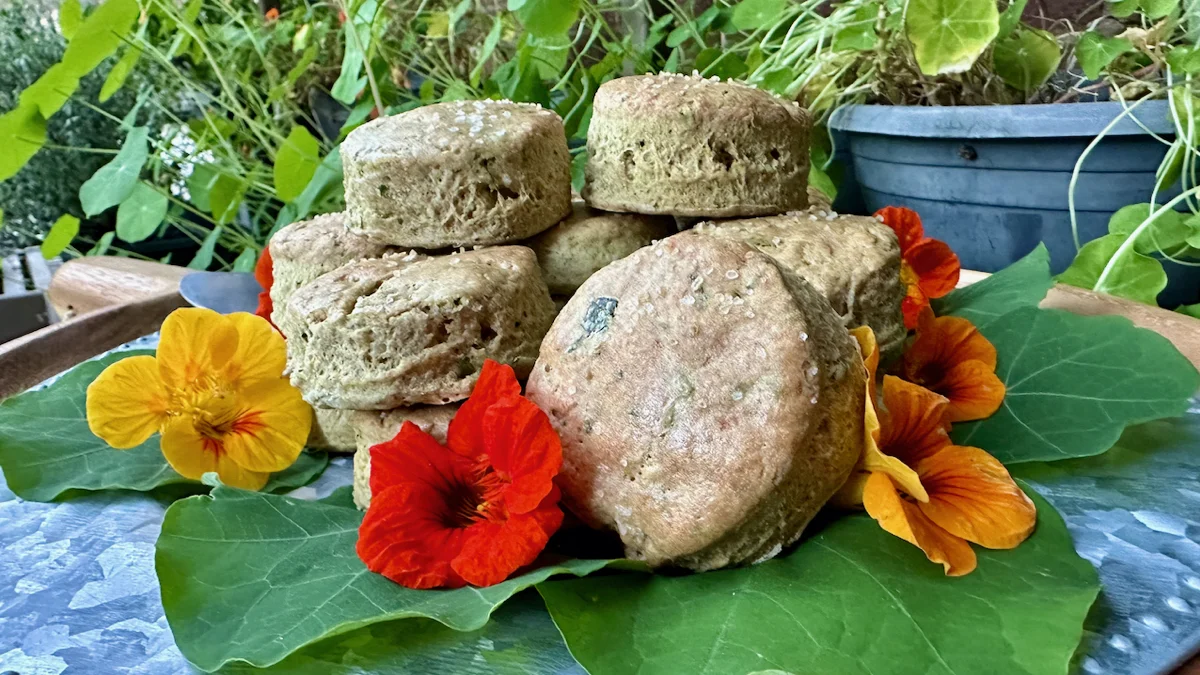
These delicious nasturtium leaf scones are soft, cheesy, and subtly peppery, akin to arugula or watercress. A distinctive garden-to-table recipe ideal for brunch, tea, or spring baking.
Nasturtium Leaf Scones – From Soil To Plate
There’s something subtly enchanting about cooking from the garden, stepping outside, collecting a handful of leaves, and transforming them into something warm and golden straight from the oven.
Nasturtiums are frequently cherished for their vivid, joyful flowers, yet it’s the leaves that conceal a hidden gem. Soft, round, and vibrant green, they possess a mild peppery kick, reminiscent of arugula and watercress, that bakes wonderfully.
These scones infused with nasturtium leaves are soft and savory, with notes of lemon, parmesan, and fresh herbs woven through each mouthful. They feel rustic yet sophisticated, akin to something you’d present at a spring brunch or a leisurely afternoon tea.
If you’ve ever been unsure about what to do with those plentiful garden leaves… this is your solution.
How Do Nasturtium Leaves Taste?
Nasturtium leaves offer a fresh peppery taste, akin to arugula or watercress, but milder and slightly more herbal. When baked into scones, that sharpness softens into a subtle savory flavor that complements:
- Parmesan cheese
- Lemon zest
- Doughs rich in butter
- Fresh herbs
They contribute both flavor and visual appeal, making them ideal for distinctive, garden-inspired baking. Seeds from the nasturtium plant can be turned into nasturtium capers, or ‘poor man’s capers‘ simply through pickling.
Reasons You’ll Adore These Savory Scones
These are not your usual sweet scones. They’re:
- Gently crisp outside, tender within
- Full of savory, herbaceous taste
- A novel method to utilize edible garden plants
- Ideal for brunch platters or tea assortments
- Visually appealing enough for Pinterest-worthy display
They also feel refined while remaining remarkably easy to prepare.
Nasturtium Plants Are Delightfully Simple To Cultivate
Whether in poor soil or nutrient-rich potted soil, nasturtium leaves thrive nearly any time of the year.
Hanging baskets during the summer or a few pots indoors in the winter will bring both color and a delightful aroma to the home.
This, of course, makes them an excellent choice to grow for the nutritional benefits in addition to their charm and beauty.
Nutritional Advantages Of Nasturtium Leaves
Leafy green nutrients, present in nasturtiums are abundant in fiber, antioxidants and curiously contain 10 times more vitamin C than lettuce, also offering vitamin D and iron.
As if that isn’t sufficient to cook with these tasty peppery leaves, they also possess antibacterial and antibiotic properties.
If these aren’t compelling nutritional reasons to incorporate nasturtium leaves into your culinary endeavors, perhaps you’d prefer to heed the wisdom from Lord of the Rings films,
as this leaf was presented as a medicinal herb; likely derived from ancient Greek folklore!
What’s Not To Treasure About A Leaf Scone
Although scones are frequently regarded as a flaky kind of bread to slather with butter and preserves for breakfast or tea, a savory scone merits equal recognition with a lunch or dinner dish.
In my American household with a British spouse, language turns into comedy. A scone vs a biscuit, a biscuit vs a cookie, but it’s enough to say that once any of these appear on my table, conversation halts (wink).
Incorporating finely minced, nutrient-dense nasturtium leaves into this simple scone mixture creates a delightful quick bread to pair with soups, salads, or even sliced and assembled as tea sandwiches.
Additional Scone Recipes To Experiment With – Savory and Sweet
There was a period, during my upbringing, when bread or biscuits were made plain, seldom anything incorporated unless they were crafted with raisins for a sweet bread.
How far we’ve progressed in baking, as you might already be aware from the diverse varieties of bread, scones, and biscuits featured here at Whisk and Dine.
- Carrot Ginger Scones – An American Carrot Ginger Scone recipe that’s NOT a carrot cake posing as a scone!
- Rustic Lemon Mint Scones – Vibrant in flavor from lemon and mint, rustic in look thanks to oat flour and quick to prepare.
- Blueberry Scones – Bursting with fresh blueberries, a buttery oat dough with lemon glaze, perfect for an afternoon tea or ladies’ gathering.
- Cheesy Beer Biscuits – A simple ‘quick bread’ recipe featuring olive oil, herbs, cheese, and beer, which lightens the dough, making them airy and fluffy.
- Herb Biscuit – Crafted to top various Pot Pie recipes in place of a pie crust.
Tasty Recipes Featuring Edible Flowers
Incorporating gorgeous edible flowers into recipes to highlight their distinct flavors and aesthetics has motivated me to cultivate them as well, serving as inspiration for my latest book Dirt To Dish.
Edible flowers elevate cocktails, embellish salads, and are ideal for crafting fragrant sugars or salts, such as lavender sugar or nasturtium salt.
An Abundance Of Nasturtium Throughout All Seasons
In my youth, a vegetable garden for cooking or a flower garden for decoration constituted what thrived in our household.
Now in my own residence, I’ve discovered herbs and medicinal plants to be an excellent method for maintaining my family’s health during cold and flu seasons all year round. As nasturtiums exhibit an extended flowering period, they offer numerous possibilities through all seasons.
Tools Required To Create Nasturtium Scones
- Baking sheet and parchment paper – A parchment-lined sheet facilitates easy removal and cleanup.
- Rolling pin – This dough rolls out sufficiently well so if a rolling pin isn’t handy, grab a wine bottle for the task (wink).
- Hand mixer, pastry cutter or a fork – Scone dough is simple to manipulate and doesn’t require excessive mixing, so even a sturdy fork can handle this dough. Your hands can manage as well, but it is advisable to avoid warming the chilled butter with your hands.
- Measuring tools, although in reality, I often estimate measurements, and it works perfectly well.
- Mixing bowl if using a hand mixer, pastry cutter, or a food processor can also be employed, just ensure not to overwork the dough. A few quick blitzes will suffice.
- Cookie cutter or biscuit cutter for uniquely shaped scones
- or merely a knife suitable for rustic slices.
- Basting brush – Applying cream or full-fat milk on the surface of the scones before baking results in a golden hue once they are done.
- An oven, of course, but even a countertop toaster oven can suffice if the scones are placed on a tray that fits, or bake them in two batches.
Essential Ingredients for Savory Nasturtium Scones
- Chilled Butter – The colder, the better for a fluffier bake on the scones.
- Chilled Whole Milk – Whole milk with its inherent fat content yields a more delightful scone.
- Ricotta, cream cheese, or mascarpone, keeping the scones moist and light. Maintain chilled until ready for use.
- Parmesan cheese provides a savory, umami richness.
- Lemon juice and zest, enhances and balances the creaminess.
- Garlic, roasted gives a nuttier profile, while raw adds a bit of heat and zing.
- All-purpose flour, preferably one with elevated protein content, or a combination of all-purpose flour and semolina flour which lends a nuttier flavor and golden hue.
- Oat flour, easily made by grinding oats in a blender or food processor.
- Baking powder and baking soda.
- Smoked chili paprika, although optional, it adds a delightful flavor depth.
- Nasturtium leaves, thoroughly washed and dried.
Steps to Create Nasturtium Leaf Scones
1. Prepare the Ingredients – Finely mince the nasturtium leaves and garlic. Keep the butter chilled until it is required.
2. Combine Dry Ingredients – In a sizable bowl, mix flour, oats, baking powder, salt, and pepper.
3. Incorporate Butter – Introduce cold butter and work it into the flour until the blend appears like coarse crumbs.
4. Add Flavor Components – Incorporate parmesan, ricotta, lemon zest, garlic, and diced nasturtium leaves.
5. Form the Dough – Gradually mix in milk, gently combining until a soft dough forms. Avoid overmixing.
6. Shape the Dough – Transfer to a lightly floured surface and gently flatten into a round about 1 inch thick.
7. Form the Scones – Employ a biscuit cutter to create rounds, pressing straight down without twisting.
8. Bake – Arrange on a lined baking sheet and bake at 400°F (200°C) for 15–18 minutes, or until golden.
9. Cool & Serve – Allow to cool slightly and enjoy warm with butter or soft cheese.
https://www.youtube.com/watch?v=Vy-RopvNE-8[/embed>
Common Inquiries
Are nasturtium leaves safe to consume raw or cooked? – Indeed, nasturtium leaves are entirely edible and can be enjoyed both raw and after cooking.
What flavor do nasturtium leaves impart in baking? – They soften when baked, delivering a subtle peppery, herbaceous note.
Can I replace it with another green? – Yes, arugula or watercress serve as the closest alternatives.
How should I keep savory scones? – Store in an airtight container for a maximum of 2 days, or freeze for extended preservation.
Is it possible to prep these ahead? – Yes, prepare the dough, cut the scones, and refrigerate until it’s time to bake.
- 8 oz Chilled butter cut into cubes
- 1/2 cup Cold whole milk additional for brushing
- 1/2 cup Ricotta or cream cheese chilled
- 1/2 cup Grated Parmesan cheese shredded
- 4 tbsp Juice of lemon or lime
- 1 tbsp Zest of lemon or lime
- 1 Clove of garlic mashed
- 2 cups All-purpose flour extra for dusting
- 1 cup Oat flour refer to notes
- 1 1/2 tsp Baking powder
- 1 1/2 tsp Baking soda
- 1/4 tsp Smoked paprika
- 1/2 tsp Salt
- 1/2 cup Chopped nasturtium leaves minced
- Nasturtium petals, optional for decoration
- Helpful hints: shaping or slicing scones is significantly simpler when the dough hasn’t reached room temperature, hence keep ingredients and dough chilled. Extra scones can be kept in the refrigerator for a week.
- Oat flour is merely rolled oats blended into a fine powder using a blender or food processor.
If you make these nasturtium leaf scones, I would love to hear how they turned out!
Feel free to leave a comment below, share your pictures, or tag me on Pinterest so I can admire your gorgeous creations.
And if you have nasturtiums flourishing in your garden… this could very well become your new favorite method to utilize them.


Post Comment